Blog
The Work Between Products, Startups, and Ecosystems
My work has moved from product design to startup development, technology business incubation, open innovation, and ecosystem building. Along the way, I’ve realized that the most interesting problems often live between these disciplines, where products, people, organizations, and opportunities intersect.
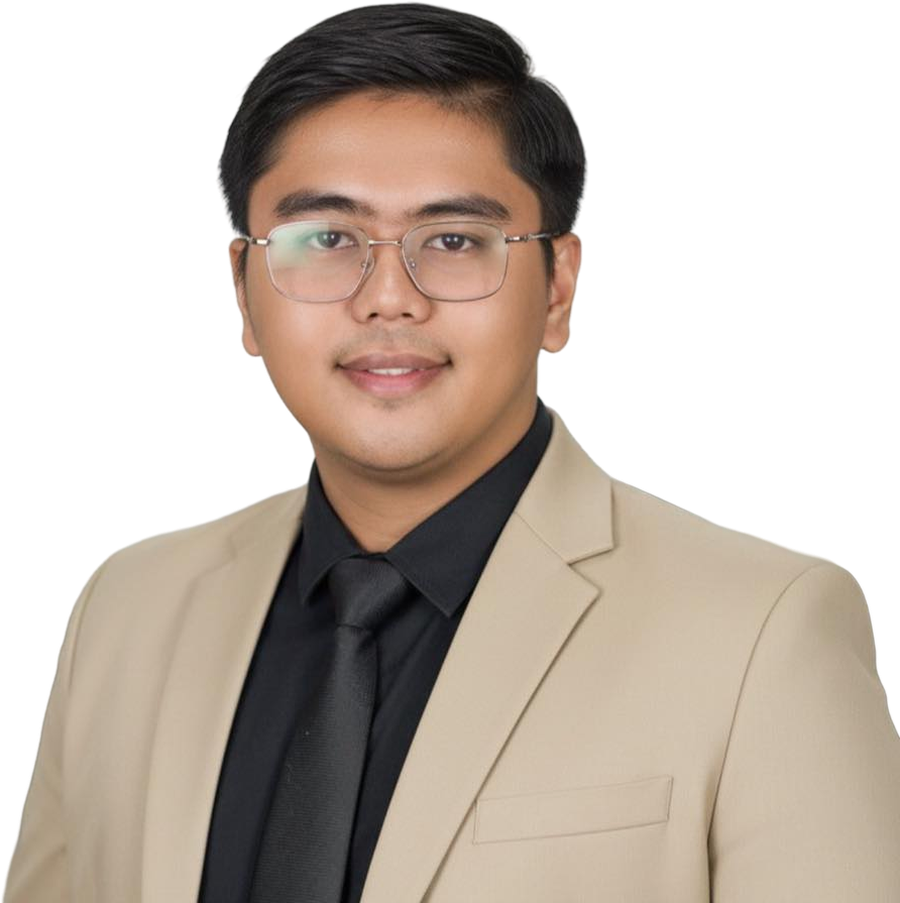 Leandro Rey GepilaSeptember 20, 20267 min read
For the longest time, I tried to explain my work through titles.
Product Designer.
Startup Development Associate.
Innovation Practitioner.
Ecosystem Builder.
Each one was accurate at a certain point in my career. But the more I worked, the less useful the titles became.
Because the work was rarely just one thing.
A product problem could become a startup problem.
A startup problem could become a program problem.
A program could reveal an ecosystem problem.
And an ecosystem problem could eventually lead back to a product that needed to be built.
That space between these things is where I’ve found most of my work.
It Started With Products
My background started in ICT and Animation before I studied Entrepreneurship at the University of the Cordilleras.
I was interested in creating things with technology.
At first, that meant thinking about interfaces, experiences, and how people interact with digital products.
But entrepreneurship changed the questions I asked.
I started looking beyond the screen.
Who is this for?
What problem are we actually solving?
Why does this need to exist?
How does it create value?
The more I asked these questions, the more I realized that designing a product is only one part of building one.
A good interface can make a product easier to use.
But it cannot fix a problem that nobody needs solved.
It cannot create a business model.
It cannot automatically create demand.
And it cannot make a team aligned around what they are trying to accomplish.
That realization pulled me toward startups.
Then I Started Working With Startups
At the UC Innovation & Technology Transfer Office, I began working much closer to early-stage ventures and SMEs.
The work became less about designing individual screens and more about helping teams navigate uncertainty.
Some teams were still validating their ideas.
Others were building prototypes.
Some were trying to understand their customers.
Others were already thinking about traction, fundraising, or how to move forward.
I supported more than 300 early-stage ventures and SMEs and managed a portfolio of 20+ incubated startups, working across business strategy, product development, milestone tracking, and fundraising readiness.
This experience taught me something important:
Early-stage building is mostly about learning.
You don’t start with certainty.
You start with assumptions.
Then you test them.
Sometimes they hold.
Sometimes they don’t.
The job is to learn quickly enough to make a better decision about what comes next.
That changed how I approached both startups and product design.
Building is not simply executing an idea. It is discovering what the idea needs to become.
Then I Started Seeing the System Around the Startup
The more founders I worked with, the more I became interested in what happens around them.
A startup doesn’t exist in isolation.
It depends on people.
Mentors.
Customers.
Universities.
Government.
Industry.
Investors.
Communities.
Other founders.
Opportunities.
When those connections are weak, even capable teams can struggle to move forward.
That led me toward technology business incubation, open innovation, and ecosystem development.
The question became bigger.
Instead of only asking:
How do we help this startup?
I started asking:
How do we create an environment where more startups can succeed?
That is a very different problem.
It requires looking beyond individual ventures and understanding the relationships between the different people and institutions involved.
From Supporting Startups to Building Ecosystems
Today, much of my work sits in this space.
At Incubator Baguio, I work as an Innovation Ecosystem Enabler, developing ecosystem programs, partnerships, and coordination mechanisms connecting government, academia, research organizations, industry, innovators, and entrepreneurs around priority challenges.
One of the projects I’ve worked on is the Baguio Innovation Platform, bringing together an ecosystem database, innovation programs, a centralized research and innovation calendar, and an Open Innovation Challenges platform.
What I find interesting about this work is that it still feels like product development.
There is a user.
There is a problem.
There are constraints.
There are different stakeholders.
There is a system that needs to work.
The difference is the scale.
Instead of designing only for a user interacting with a screen, you might be designing for founders, government offices, universities, researchers, businesses, and communities interacting with one another.
The interface gets bigger.
But I Never Really Left Product Design
Moving into ecosystem development didn’t mean leaving product design behind.
I’ve continued to work on digital products and platforms, including Tarana AI, Amianan Ventures, and the UC InTTO website, among other projects.
And I still enjoy the process.
Taking something complicated and making it clearer.
Mapping a user journey.
Finding friction.
Structuring information.
Turning an abstract idea into something people can actually experience.
But I now approach product design differently.
I don’t see a product as an isolated object.
I see it as part of a larger system.
A product exists within a business.
A business exists within a market.
A startup exists within an ecosystem.
And an ecosystem is shaped by the relationships between people and organizations.
That connection is what keeps pulling me between disciplines.
The Interesting Work Happens in the Middle
Looking back, I don’t think my career has really been a series of unrelated roles.
It has been a gradual widening of the same problem.
First, I wanted to understand how to build products.
Then:
How do we build something people actually need?
Then:
How do we help a startup turn that into a sustainable venture?
Then:
How do we create programs that help more people do this?
And eventually:
How do we build an ecosystem that makes all of this possible?
Each question led to another.
And each answer created a bigger question.
That’s why I don’t think of product design, startups, innovation programs, and ecosystem building as separate areas anymore.
They are different layers of the same work.
What I Do Now
Today, my professional positioning is:
Innovation Ecosystem Builder | Open Innovation | Product Designer.
But the title is less important to me than the problem.
I like working where there is something that needs to move forward but hasn’t quite found its shape yet.
An early idea.
A product that needs direction.
A startup trying to understand its next step.
An innovation program that needs structure.
An organization trying to create something new.
An ecosystem trying to connect people and opportunities.
My role changes depending on the problem.
Sometimes I’m designing.
Sometimes I’m facilitating.
Sometimes I’m mentoring.
Sometimes I’m building.
Sometimes I’m connecting people.
Sometimes I’m simply asking questions that help clarify what should happen next.
The common thread is:
making sense of complexity and turning it into action.
Why I Built REYNNOVATION
For a long time, my work existed in separate places.
Projects in one folder.
Pitch decks in another.
Programs documented through reports.
Workshops captured through photos.
Startup lessons left in conversations.
Ecosystem work spread across projects and organizations.
I wanted a place where these things could come together.
Not simply as a portfolio, but as a record of the thinking behind the work.
What I build.
What I learn.
What I’m trying to understand.
What I’m trying to improve.
REYNNOVATION is that space.
It brings together my work across products, startups, innovation, open innovation, and ecosystem building.
And this blog is where I want to document the ideas behind them.
Still Working Between the Lines
I don’t know if my work will eventually settle into one discipline.
I’m not sure I want it to.
There is something valuable about being able to move between different perspectives.
A designer can look at a system differently.
A founder can see an opportunity differently.
An ecosystem builder can see connections that aren’t obvious from inside one organization.
And when those perspectives come together, new possibilities appear.
That’s the space I’m interested in.
Between products and businesses.
Between startups and ecosystems.
Between ideas and execution.
Between problems and opportunities.
That is where I want to keep working.
Not necessarily in one box.
But in the space between them.
Open for collaboration
Have a project in mind?
I take on a small number of projects each quarter. Let's see if we're a fit.