Blog
What I Learned from Paco Magsaysay: Building a Business Around Quality, Differentiation, and Patience
I recently attended a PCCI Baguio-Benguet session with Paco Magsaysay of Carmen’s Best. Here are some of the lessons I took away on product differentiation, quality, rejection, sales, and knowing when it’s time to scale.
 Leandro Rey GepilaSeptember 27, 20264 min read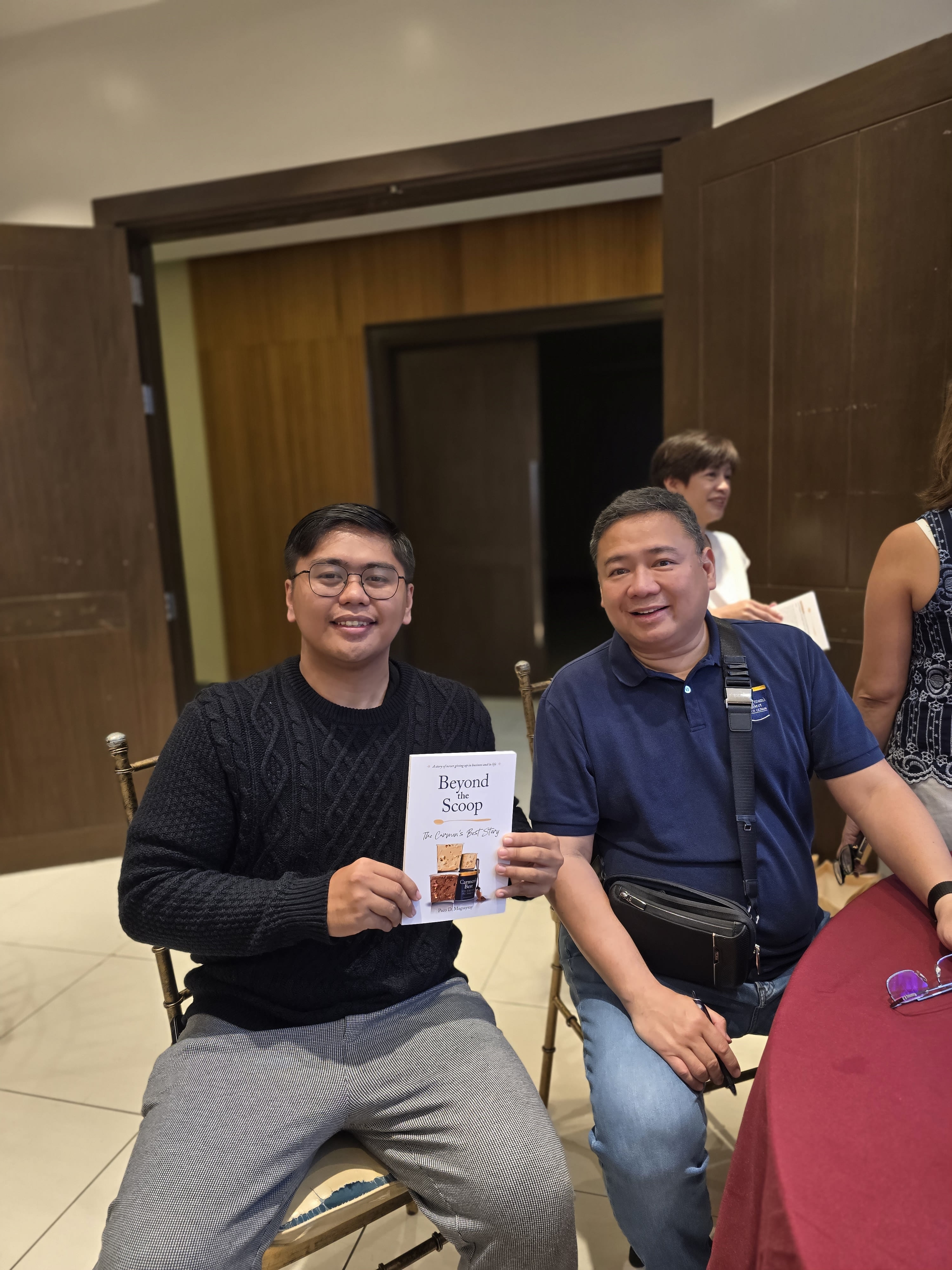
I recently attended “Real Stories… Real Business,” a session organized by the Philippine Chamber of Commerce and Industry Baguio-Benguet, featuring Paco Magsaysay, founder of Carmen’s Best Ice Cream.
What stood out to me was that his story was not just about building an ice cream brand. It was about making deliberate decisions around product quality, differentiation, growth, and knowing when to take risks.
Here are some of the lessons I took away from the session.
1. Have a reason for being different
One of the biggest lessons was the importance of product differentiation.
Paco shared how Carmen’s Best chose to do things differently from mass-produced ice cream. Instead of using the same approach as mass-market products, they focused on using fresh milk and building their flavors from the ground up.
Their goal when they started was not simply a monetary target. It was a quality target.
That really stood out to me.
Sometimes, businesses focus too much on asking:
“How much can we sell?”
when an equally important question is:
“What do we want our product to be known for?”
If your product has something genuinely different and valuable, you have a reason for customers to choose you.
2. Not everyone is your customer
Another lesson I found interesting was his approach to pricing.
Paco shared that Carmen’s Best did not try to compete for the mass market. They focused on customers who valued what the product offered.
He also shared that when people complain about the price, they don’t argue with them. If the customer does not see the value in the product at that price, they may simply not be the right market.
This is an important reminder for entrepreneurs:
You don’t have to convince everyone.
The goal is not necessarily to create something everyone will buy. It is to create something valuable enough for the right people to choose.
3. Differentiation needs to be clear
Having something different is not enough. Customers also need to understand why it is different.
Paco emphasized that the higher the product differentiation, the better, but businesses should avoid confusing the market.
That made me think about how we communicate products.
A business can have a great product, but if customers cannot quickly understand what makes it different, that advantage can easily get lost.
Be different, but make the difference easy to understand.
4. Rejection is part of building a business
One of the most memorable points from the session was:
If you are not used to rejection, don’t start a business because you are going to quit.
Building a business means hearing no.
Customers will say no. Partners will say no. Investors may say no. Potential accounts may take months before they make a decision.
And the bigger the account, the longer the sales process can become.
That means entrepreneurs need to develop patience alongside persistence.
A “no” does not always mean the opportunity is gone. Sometimes it simply means not yet.
5. Don’t expect big accounts to close quickly
Another practical lesson was about sales.
Paco shared that the bigger the account, the longer it can take to close.
This is something that is easy to underestimate, especially when you’re starting out and expecting every opportunity to move quickly.
A large organization may have multiple decision-makers, procurement processes, budgets, and internal approvals.
So instead of asking:
“Why haven’t they closed yet?”
it can be more useful to ask:
“What needs to happen before they can say yes?”
Understanding the buying process can help you manage expectations and build better relationships.
6. Growth also means solving logistics
Expansion isn’t only about selling more.
Paco also talked about how expansion needs to be supported by logistics.
If demand increases, can you actually deliver?
Can your production keep up?
Can your equipment handle the volume?
Can you distribute efficiently?
Can your operations support more locations?
Growth creates new problems if the business is not ready for it.
That means scaling should not just be a question of “Can we sell more?”
It should also be:
“Can our entire operation support selling more?”
7. When is the right time to scale?
This was probably one of the questions I found most useful.
There isn’t one universal answer to when a business should scale.
The right time depends on the risk involved and the capacity of the business to take that risk.
Can your current machinery handle the additional demand?
Do you have enough financial capacity?
Can you support the additional operational requirements?
Can you take the risk if things don’t go as planned?
Scaling is not simply about seeing an opportunity and jumping into it. It is about understanding whether the business is ready to take on the consequences of that decision.
What I took away
What I appreciated most about Paco’s story was that many of the lessons were surprisingly simple.
Build something different.
Make the difference clear.
Know who you’re building for.
Get comfortable with rejection.
Be patient with bigger opportunities.
And scale when you’re ready to take the risk.
For me, the biggest takeaway is that building a business is not always about chasing growth as quickly as possible.
Sometimes, it is about building something worth growing first.
That was one of the most valuable lessons I took from the PCCI Baguio-Benguet session with Paco Magsaysay.
Comments
No account needed — just leave your thoughts.
Loading comments…
More from the blog
Keep reading
The Vanity Metrics of Innovation: When Being Busy Starts Looking Like Impact
We count events, participants, startups, partnerships, and social media numbers because they are easy to see and report. But in startups and innovation ecosystems, the numbers that look impressive aren’t always the numbers that tell us whether we’re actually creating change.
The Work Between Products, Startups, and Ecosystems
My work has moved from product design to startup development, technology business incubation, open innovation, and ecosystem building. Along the way, I’ve realized that the most interesting problems often live between these disciplines, where products, people, organizations, and opportunities intersect.
Open for collaboration
Have a project in mind?
I take on a small number of projects each quarter. Let's see if we're a fit.